
NEWS CENTER
Application and Development of Nickel Alloy in Aviation Field
2022-08-01
R.F.Smith of the United Kingdom discussed the development of four aspects of nickel alloys recently used in aviation, the first is the disk alloy; the second is the low expansion superalloy; the third is the superplastically formable nickel-based superalloy (Inconel718 alloy); the fourth It is a low expansion alloy (Nilo) for composite preparation tools.
Nickel-based superalloys for aero-engine discs The development goal of this type of alloy is to increase the use temperature by adding additional elements. A newly developed nickel-based alloy with better creep and fatigue properties, its composition is Ni-20Cr-1.5Al-3Ti-4.5Mo-13.5Co. The alloy was initially prepared using vacuum induction melting (VIM) and vacuum arc remelting (VAR). Due to the reduced life of the discs due to the white spots of composition segregation and carbide aggregation in the alloy, US Specialty Metals Corporation (SMC) switched to VIM and electroslag refining to eliminate these defects. Future updated engines require higher temperature and strength of the material used. The Udimet 720 alloy (Ni-16Cr-2.5A1-5Ti-3Mo-14.7Co-1.25W) originally used for blades requires powder metallurgy to be prepared into large disc forgings, and now SMC has passed the melting and refining process, as well as forging Through the research and improvement of the process, the forging billet with a diameter of φ250mm has been successfully prepared and used in the engines of civil and military aircraft.
Low expansion superalloys Chromium-containing superalloys used in gas turbine engines, such as Inconel 718 alloy, have high expansion, which can cause problems such as fit tolerances, requiring careful design and the use of expensive mechanical cooling systems and between rotating parts and seals. There are effective gaps and other measures to solve these problems. In order to solve the problem from the root cause, we have started to explore the use of new low-expansion superalloys to improve engine efficiency and low-chromium Incoloy903 alloys for the development of compressor casings and covers , and later developed Incoloy907 alloy with niobium addition and reduced aluminum content, and Incoloy909 alloy with silicon addition. Although the latter improves the durability and plasticity, its high temperature oxidation resistance is poor, requiring high temperature coating to be used, and there is stress concentration It will accelerate the grain boundary crack propagation and other problems. To this end, Inconel 783 alloy (28.5A13Cr34Co.3Nb5.4A10.1Ti) with high cobalt content was developed. The alloy has oxidation resistance and resistance to stress grain boundary crack growth. It can be used at temperatures below 700 °C without coating. Its stress durability is better than that of Incoloy 909 alloy, and it also has a certain low expansion. It is the main research of future aerospace materials. object.
Inconel718SPF--Superplastic formable nickel-based alloy, the alloy composition is the same as the standard (AMS5596) Inconel718 alloy, containing 50%Ni, 17%Cr, 0.6%A1, 1%Ti, 30%Mo, 5%Nb, The balance is Fe. But the alloy also has its own standard AMS5950. The main difference is that the best thermal deformation is required to obtain fine grain size. Compared with ordinary Inconel 718 alloy, the fine-grained superplastically formable Inconel 718SPF alloy has a 100-fold increase in fatigue life. Moreover, it is easier to make components with complex shapes, high specific strength at high temperature and low manufacturing costs by making full use of superplastic molding technology. Because the original superplastic forming technology was mainly used for aluminum and titanium alloys. Inconel 718SPF superplastic forming alloy represents the latest advancement in material superplastic forming technology.
Low-Expansion Alloys (Nilo) for Composite Tooling Recently, as aircraft skin materials have shifted from aluminum to carbon-reinforced thermoset and thermoplastic resin materials, the expansion characteristics of the tooling materials used to machine such composite components persist throughout the composite cure. The temperature range should be similar to the material being processed. Of course, composite materials can be used to make molds, but their service life is short and the cost is high, which is not conducive to mass production. Therefore, the low expansion characteristics of Nilo alloy "Invar effect" can meet this requirement. Since 1985, SMC Company has produced many Ni-Fe Invar alloys, such as Nilo36 and Nilo42 alloys, when these Alloys are not used in composite tools. Nilo alloys are now produced in wide and thick plates, extruded profiles and square bars to make composite tooling. Nilo alloys are easily machined into composite tooling with more complex shapes , the yield strength is 276MPa, the tensile elastic modulus is 138GPa, the elongation can reach 50%, and the work hardening rate is low, the elastic rebound is small, and the Nilo36 alloy is easy to be formed by cold and hot processing. Earlier Nilo alloy was used for composite material processing One of the main reasons for the limitation of tools is the welding problem. Now SMC has developed filler alloys CF36 and CF42 for welding, which are alloys modified by adding Nb-C, and their compositions are CF36:0.2C, 0.4Mn, 36Ni respectively , 1.5Nb, and the rest are Fe; CF42: 0.2C, 0.4Mn, 41.5Ni, 1.5Nb, and the rest are Fe. These two alloys are used for welding Nilo36 and Nilo42 alloys, respectively. The welded joint has the same expansion coefficient as the base material. , to obtain high-quality, crack-free welds. After the Ni-Fe solid tile alloy is made into tools and welded, it should be annealed at 760 ° C for 2 hours, and then furnace or air cooling to relieve stress.
Recently, American SMC has developed Nilo365 alloy with better rigidity and higher hardness, which can be made into machining tools with longer service life. The composition of the alloy is similar to that of Nilo36 alloy, but Nb and Ni are added (the balance of 43.5Ni3.3Nb1.4Ti0.2Co is Fe).
In conclusion, in terms of engine discs, SMC continues to develop and research low-expansion alloys for engine castings in accordance with the requirements of engine manufacturers, and to provide manufacturers with newer alloys that can be superplasticized. In terms of composite processing and manufacturing, SMC continues to develop, research and supply alloys for machining tools. Nickel-based alloys have played an extremely important role in the aviation industry from aircraft engines in 1940 to today's aircraft composite structures.
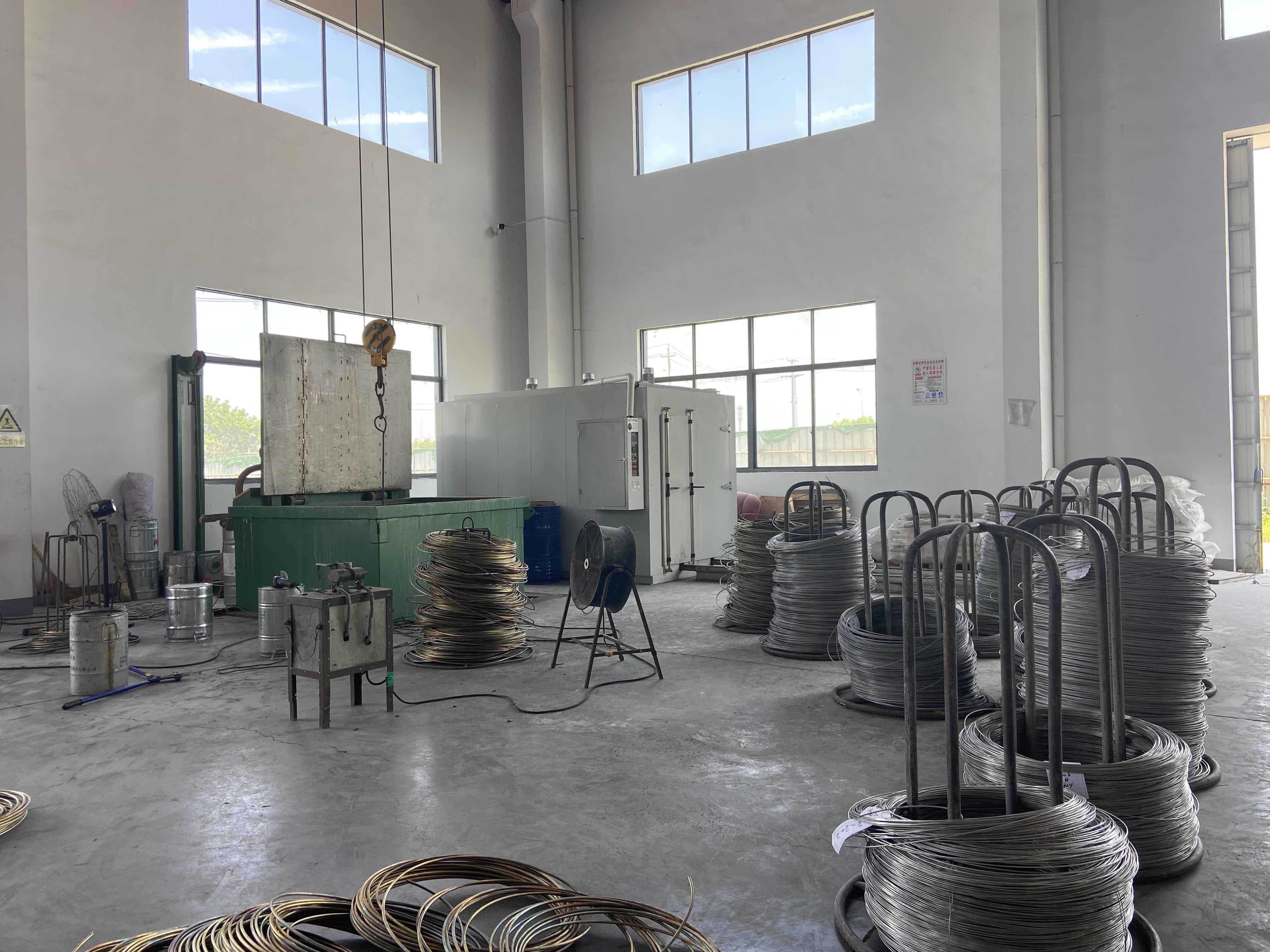
The company has advanced special smelting, casting, wire drawing, hydrogen stripping and other full production chain equipment, and can independently produce corrosion-resistant alloys (pure nickel wire N4, N6, Monel Monel400, 500), copper-nickel low-resistance heating alloy (NC003- NC050), compensation wire for thermocouple (K, N, E, T, J), high-performance special alloy materials such as high-temperature alloys, precision alloys, hydrogen storage alloys, etc. Wire, flat, stranded, bar, coil materials, etc. From upstream raw material procurement to downstream physical property testing of finished products, to final product quality tracking, product quality is monitored in an all-round way.
Jiangsu Bohang Alloy Technology Co., Ltd.
MAIL: info@bh-alloy.com
ADD.:No. 8, Fenglin Avenue, East Park, Lvcheng Town, Danyang City, Jiangsu Province
Mobile Site


Copyright© 2022 Jiangsu Bohang Alloy Technology Co., Ltd. Powered by www.300.cn
This website already supports IPV6 SEO


